
AI-powered solution

Gaming

Entertainment

B2C

AI
Falling Chess
https://fallingchess.com/
Chess meets falling blocks
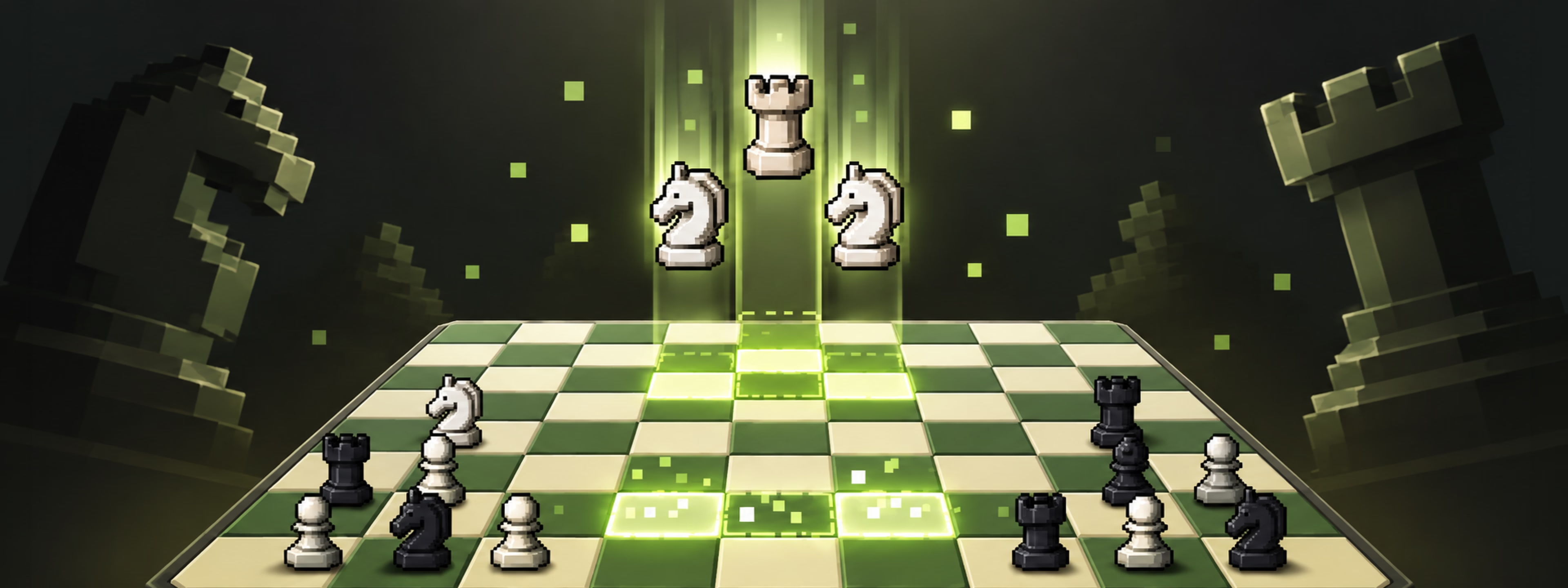
Falling Chess is a puzzle game combining chess strategy with falling-block mechanics. Players drop formations of chess pieces, capture opponents using familiar moves, clear completed rows, and adapt their strategy as the board continuously evolves, creating a new tactical challenge every session.
The problem
Can a small team build a game worth coming back to?
We set out to create our first original commercial game with a small team and a focused scope. The challenge was to build enough systemic depth for long-term replayability without relying on handcrafted content, paid acquisition, or heavy production resources, while keeping the game distinctly human-crafted in an increasingly AI-generated market.
The solution
Research before production
Before committing to a concept, we studied the team's favorite games, researched the premium mobile market, evaluated five different settings against seven criteria, and built a game-design knowledge base from ten books.
Prototype before commitment
An initial playable concept, Lumen Abyss, let us test the team's ability to rapidly build, deploy, playtest, and improve a systems-driven game before committing to the final direction.
A simple mechanical hook
Falling Chess combines two immediately understandable systems: chess captures and falling blocks. Players position and rotate formations, capture pieces using chess movement rules, and clear completed rows.
Mechanics that create stories
Rather than relying on scripted levels, a small number of interacting rules continuously produce new board states, tactical decisions, capture opportunities, cascades, and unexpected outcomes.
Playtesting shaped the game
The product evolved through repeated playtests rather than following a fixed initial concept. Gravity Cascade emerged as a central mode, while PvP continues to evolve and meta-progression was deliberately postponed until the core loop proved strong enough.
AI as a production multiplier
AI agents supported research, synthesis, documentation, coding tasks, and asset production throughout development, while gameplay decisions and creative direction remained human-led.
Results
5
Game concepts evaluated before committing to the final direction.
7
Criteria used to systematically evaluate potential game concepts.
3
Play modes already represented in the product: Single Player, Gravity Cascade and PvP.
Key features
Highlights
Place, capture, clear
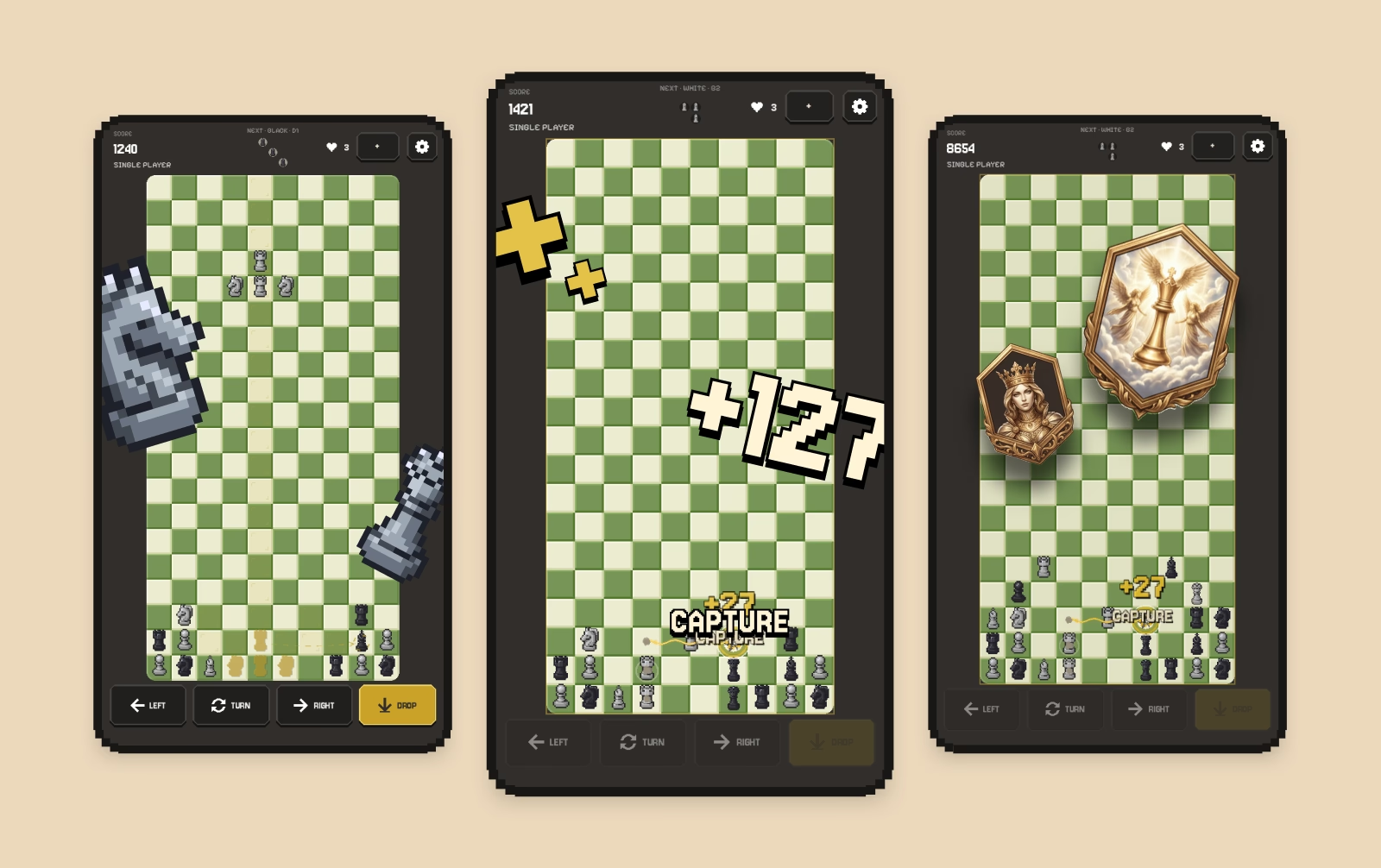
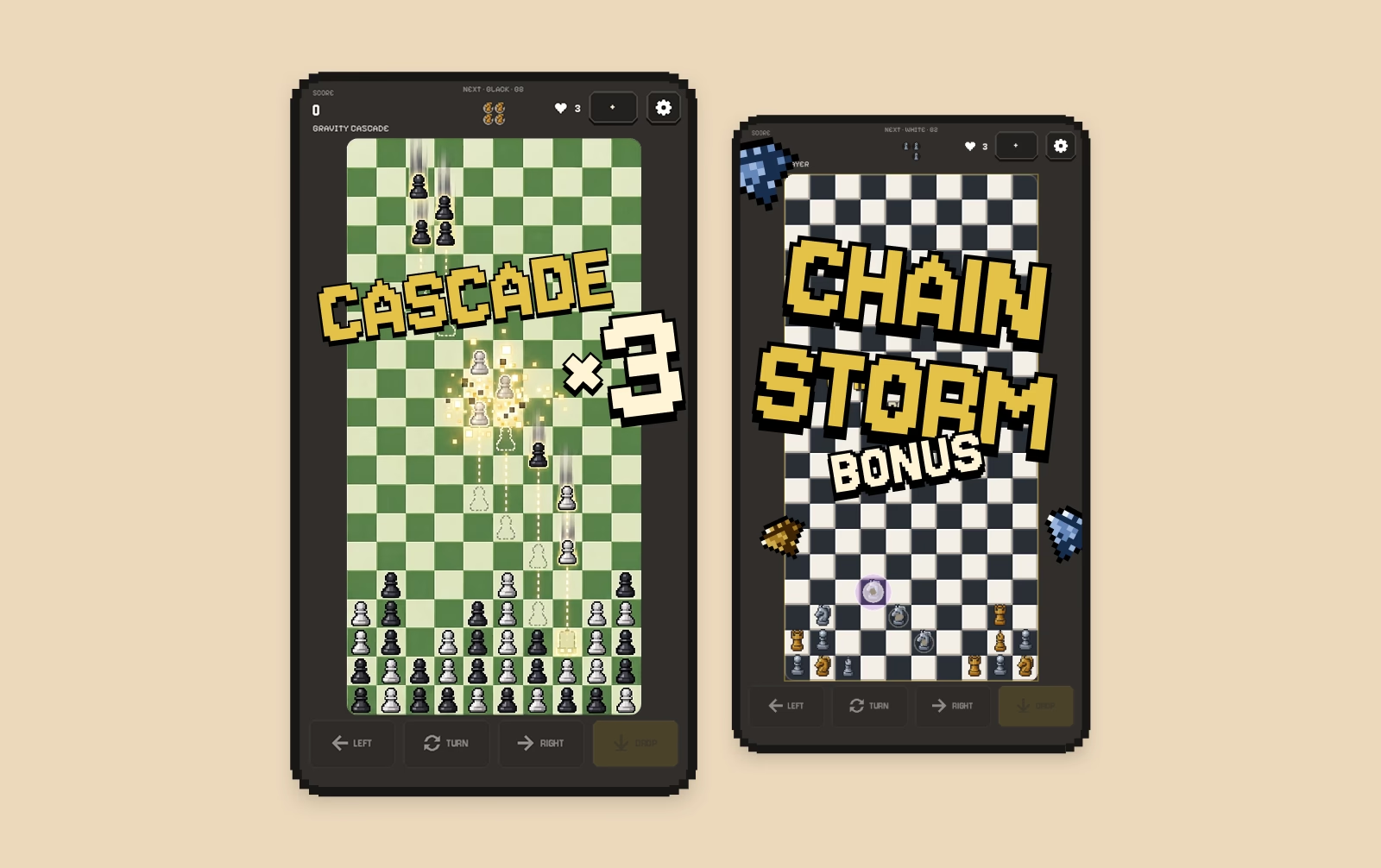
Drop squads of three or four chess pieces, position them strategically, make captures according to chess movement patterns, and complete rows to clear space and keep the game going.
Gravity Cascade
Unsupported pieces fall as the board changes, creating chain reactions and new opportunities for captures and row clears. The mechanic turns every placement into a decision with consequences beyond the immediate move.
Multiple ways to play
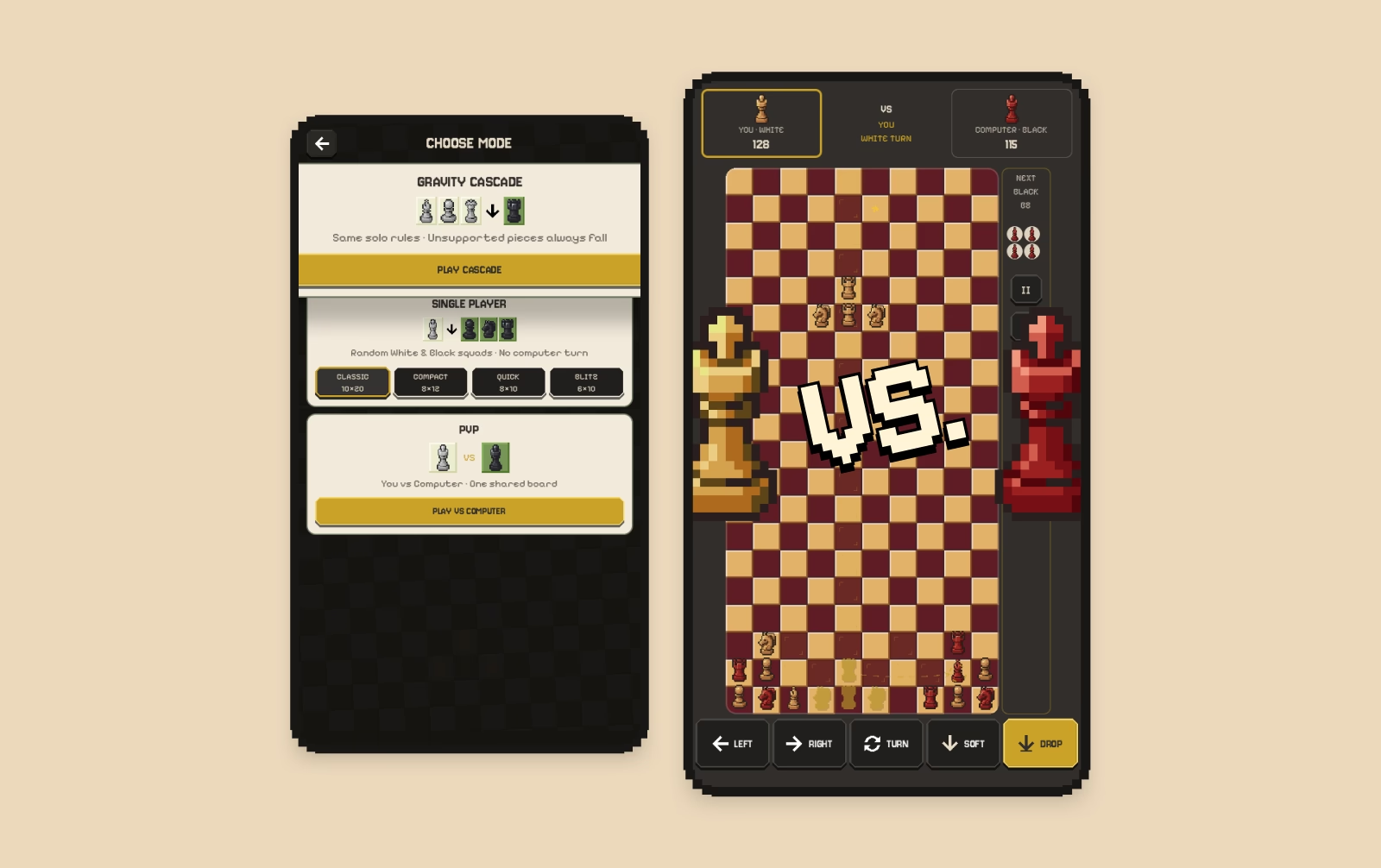
Single Player offers four board configurations — Classic, Compact, Quick and Blitz — alongside Gravity Cascade and PvP on a shared board. The current browser build also supports playing against the computer or finding an online opponent.

Let's get in touch
Schedule a call with David to get free tech advice and a comprehensive quote based on over 15 years of industry expertise.
Schedule a call